L-Mount Macro Options: Venus Optics Laowa 180mm f/4.5 1.5x Ultra-Macro APO
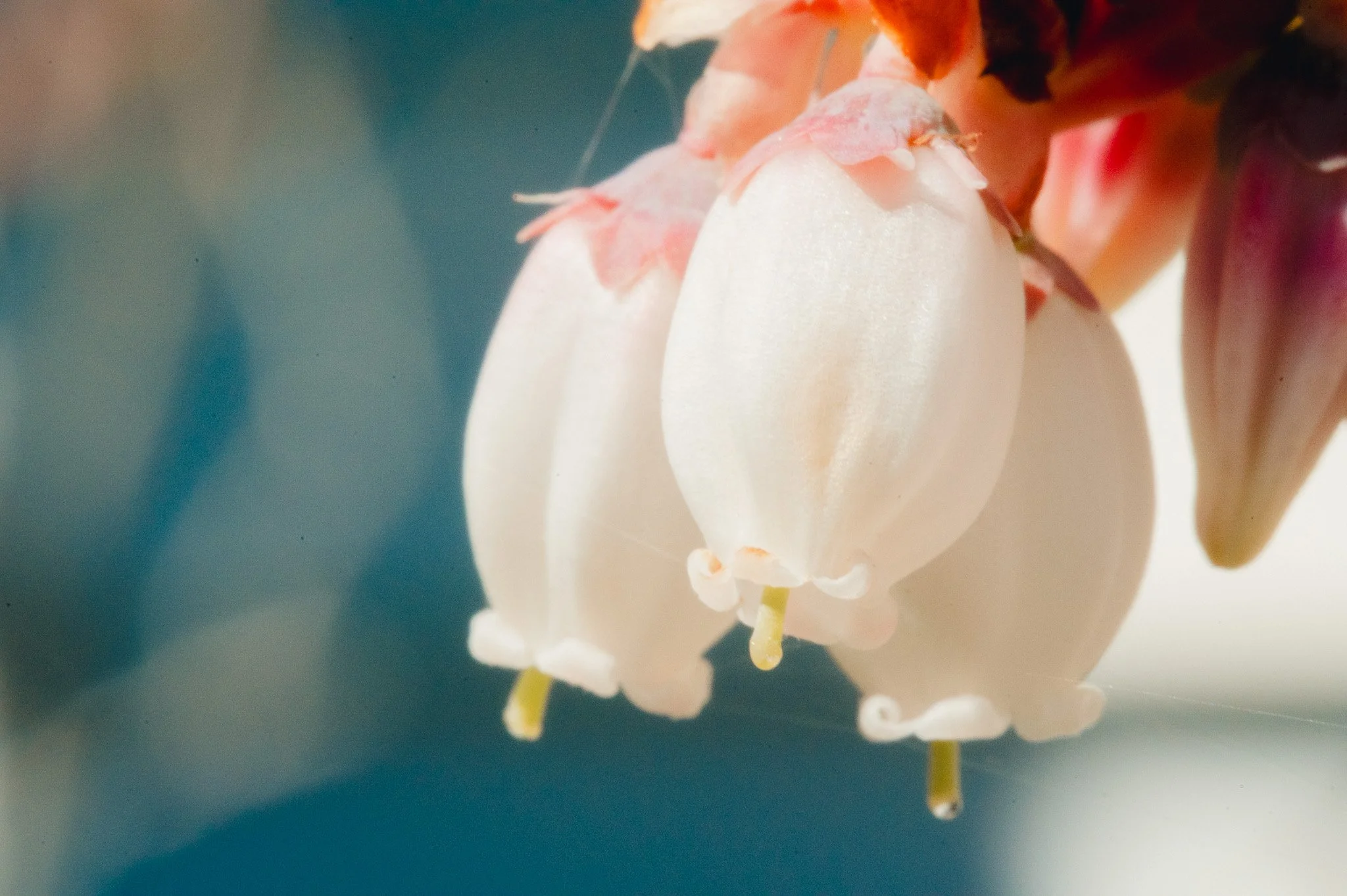
This time of year, when spring begins, flowers bloom, and bugs appear, I usually get an itch to do some macro photography. I have yet to settle on a specific setup that I would consider my go-to macro kit. Over the years, I’ve tried different lenses and equipment, trying to figure out what works best for me. This has inspired me to write a series of posts about the options available in the L-mount alliance.
Since covering everything would make this a very long post, I'll concentrate on one lens at a time and share my thoughts along with some comparisons. In this entry, I’ll focus on the lens I recently tested: the Venus Optics Laowa 180mm f/4.5 1.5x APO.
I will approach this series from a hobbyist perspective. I don’t claim to know everything about macro photography, but I believe I can provide enough information for anyone interested in trying it out.
Magnification Ratio: Scaling the Small World
Since this is the first post in the series, one of the first things I want to do is discuss the magnification ratio for those who are unfamiliar with it. When looking at different options for macro photography, this will be one of the top specs to consider. Generally, you may see lenses marked as 0.5x (or 1:2), 1x (or 1:1), 1.5x (or 1.5:1), and so on. This indicates the subject's relationship to the camera’s sensor.
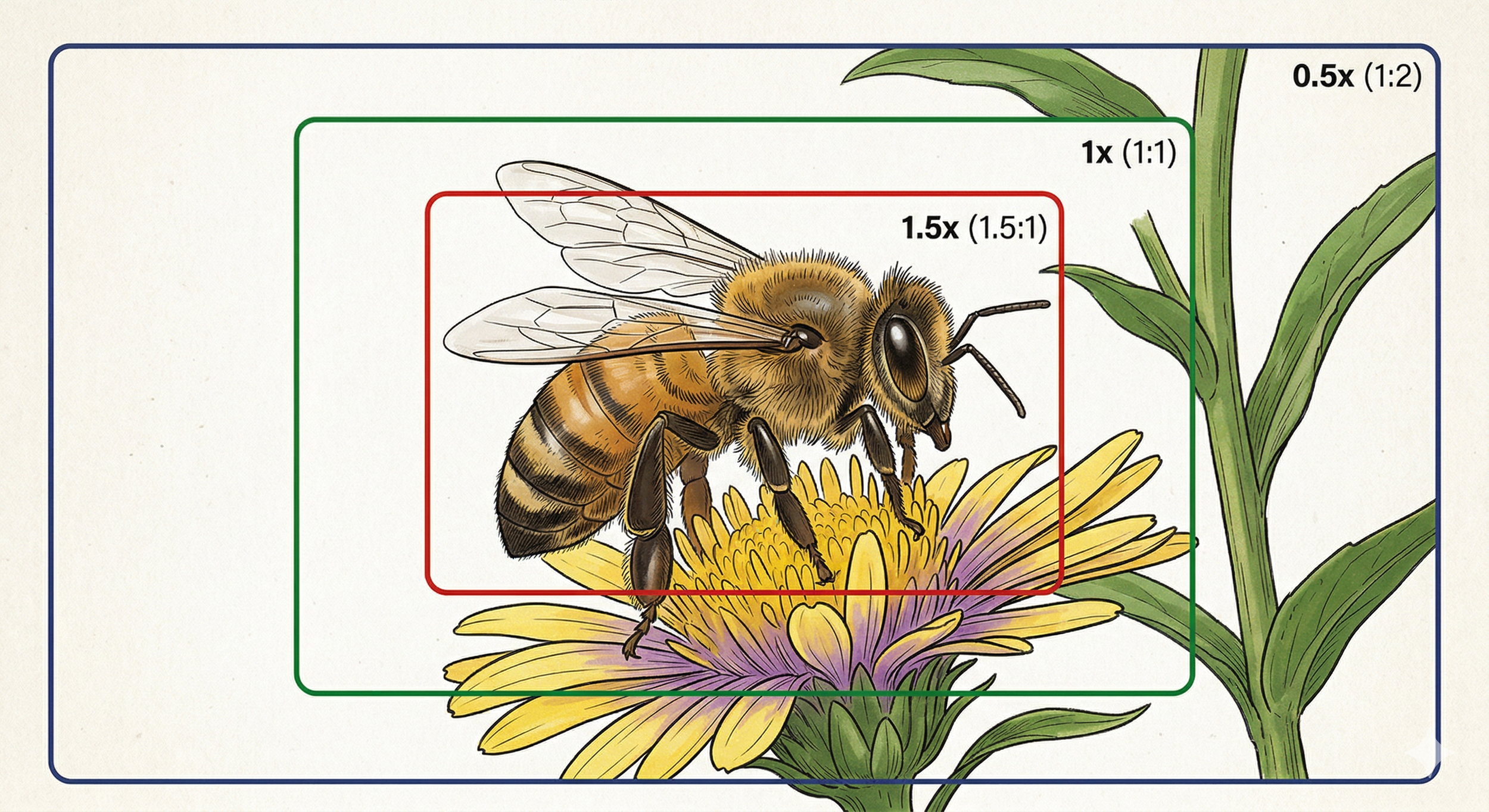
A represetation of the crop factor.
A standard macro lens, like the Lumix 100mm f/2.8 Macro, offers a 1:1 ratio. This means that if you photograph a 10mm-long bee, it will occupy 10mm of space on a full-frame sensor. It’s a life-sized representation that allows for incredible detail.
However, not every lens labeled macro reaches that life-sized threshold. Take the Lumix 28-200mm f/4-7.1, for example. While it is impressively versatile for a travel zoom with macro capabilities, its maximum magnification is 1:2. At this ratio, that same 10mm bee would only occupy 5mm on your sensor. It’s great for flowers or larger insects, but you’ll find yourself cropping in significantly if you want to see the finer details of the bee.
Then you have lenses like the Laowa 180mm f/4.5; it goes a step further by offering a 1.5:1 ratio. This means it renders subjects at 1.5 times their actual life size. That 10mm bee now stretches across 15mm of your sensor.
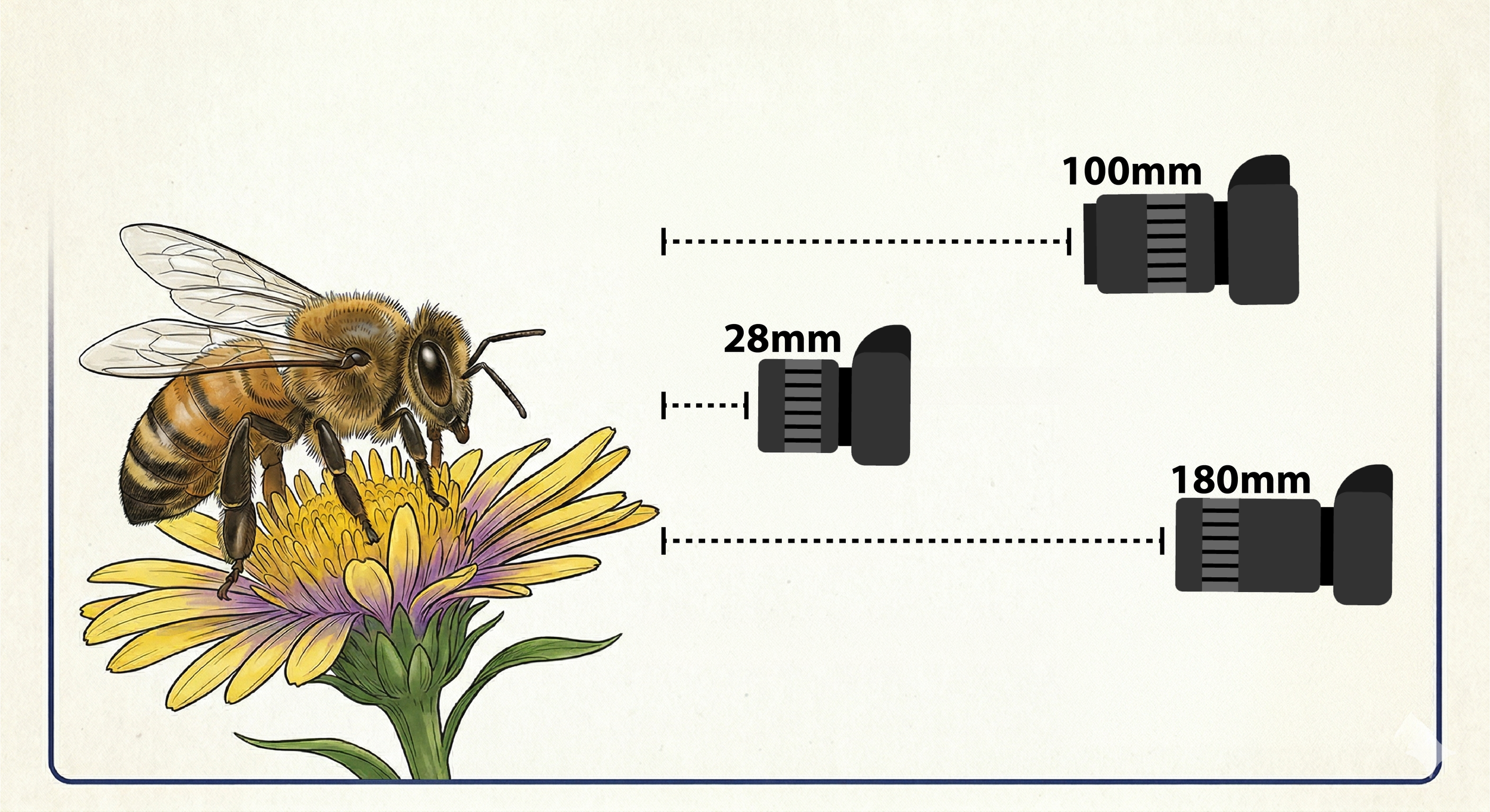
A representation of working distance between focal lengths.
Working Distance: Finding the Right Gap
While magnification determines how large the bee appears on your sensor, the focal length of your lens determines your working distance—the actual physical space between the front of your lens and your subject. This is also important to consider when looking for a macro lens.
If you were to use a camera like the Leica Q2, which has a fixed 28mm lens with a dedicated macro mode, your working distance is very close. To get a close-up of a bee, you would need to be just a few centimeters away from it. At this range, it is very difficult to avoid disturbing it, while the camera body will most likely block the light from reaching your subject, making it a challenging tool for anything that moves.
A lens like the Lumix 100mm f/2.8 Macro offers much more space to work with. At its 1:1 magnification, you will have more working distance from your subject. A longer range is often ideal for many macro photographers because it’s far enough to avoid startling most insects while still practical for handheld shooting. It lets you stay back just enough for light to hit the subject naturally.
The Laowa 180mm f/4.5 offers even more breathing room. Thanks to its longer focal length, you can achieve the same life-sized (or even 1.5x) magnification while staying much farther back from the bee. This added distance is a major benefit; it allows you to keep a comfortable distance, reducing the chance of disturbing it or getting stung.
But that working distance comes at a cost. With a longer focal length, you introduce more camera shake and difficulty tracking a moving subject. There is a lot more that we can get into, but for now, let’s shift to my thoughts on the Venus Optics Laowa 180mm lens.
A Lens of Give and Takes
When choosing lenses for macro work in the L-mount alliance, the two well-known options are the Sigma 105mm Macro Art and the Panasonic Lumix 100mm Macro. The Sigma is older, bigger, and heavier, but is known for excellent image quality and is more affordable on the used market. Meanwhile, the Lumix is newer, lighter, and smaller, but it costs more.
I am not sure whether I would say the Laowa macro lenses are somewhere between the two or outside them. The Laowa 180mm is thinner than both lenses and, almost as long as the Sigma, it sits in the middle of the two when weight is considered. Both the Sigma and the Lumix are also weather-sealed and autofocus lenses, while the Laowa has neither.
I rented the Laowa 180mm lens from Lensrental.com. I say this as a preface to some of my feedback on this lens. Because I don’t know how well others treated this lens, I don’t want to be too harsh on it, but it can also tell us how well a lens might hold up over time.
The lens has an all-metal body that feels fairly lightweight but not cheap. What caught my attention the most was the bluish tint of the lens's exterior, and the font used on it made it stand out from most other lenses. I’m not sure whether I like or dislike the lens's look; ultimately, it is the performance that matters most.
Focusing: The Fine Line of Precision
The aperture and focus rings are well spaced. When using the lens, I never really fumbled around trying to locate either. Manual focusing with this lens was where I encountered some issues. The focus throw isn’t bad, but even the slightest movement of the ring can easily cause you to lose focus. I feel that if it had a longer focus throw and perhaps a bit more resistance, nailing focus might be easier. This copy also felt a bit gritty when turning the focus rings in a particular range; this could be due to it being a rental, but I can’t say for certain.
I couldn’t help but compare the focusing experience to that of the Leica 100mm APO Macro-Elmarit-R lens's manual focus. That lens has an almost ridiculously long focus throw, but it has just the right amount of resistance to prevent accidental movement of the focus ring. Because of the longer focus throw, it feels a bit more precise. With the Laowa lens, I found that once I got the subject mostly in focus, instead of trying to lock focus with the ring, I would shift my body forward or backward to achieve focus. I guess this is my way of saying it didn’t feel as precise.
Image Quality: When the Stars Align
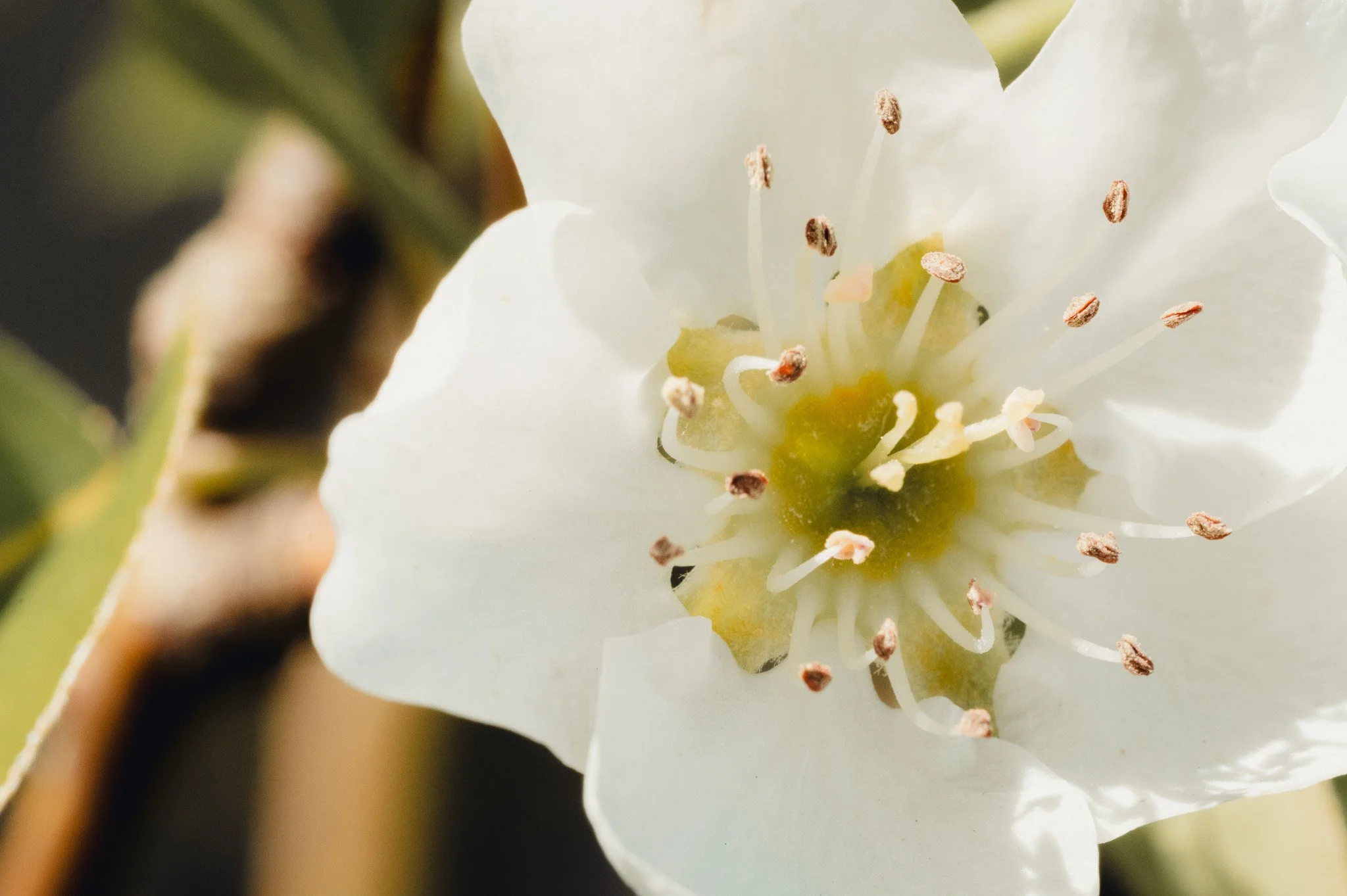
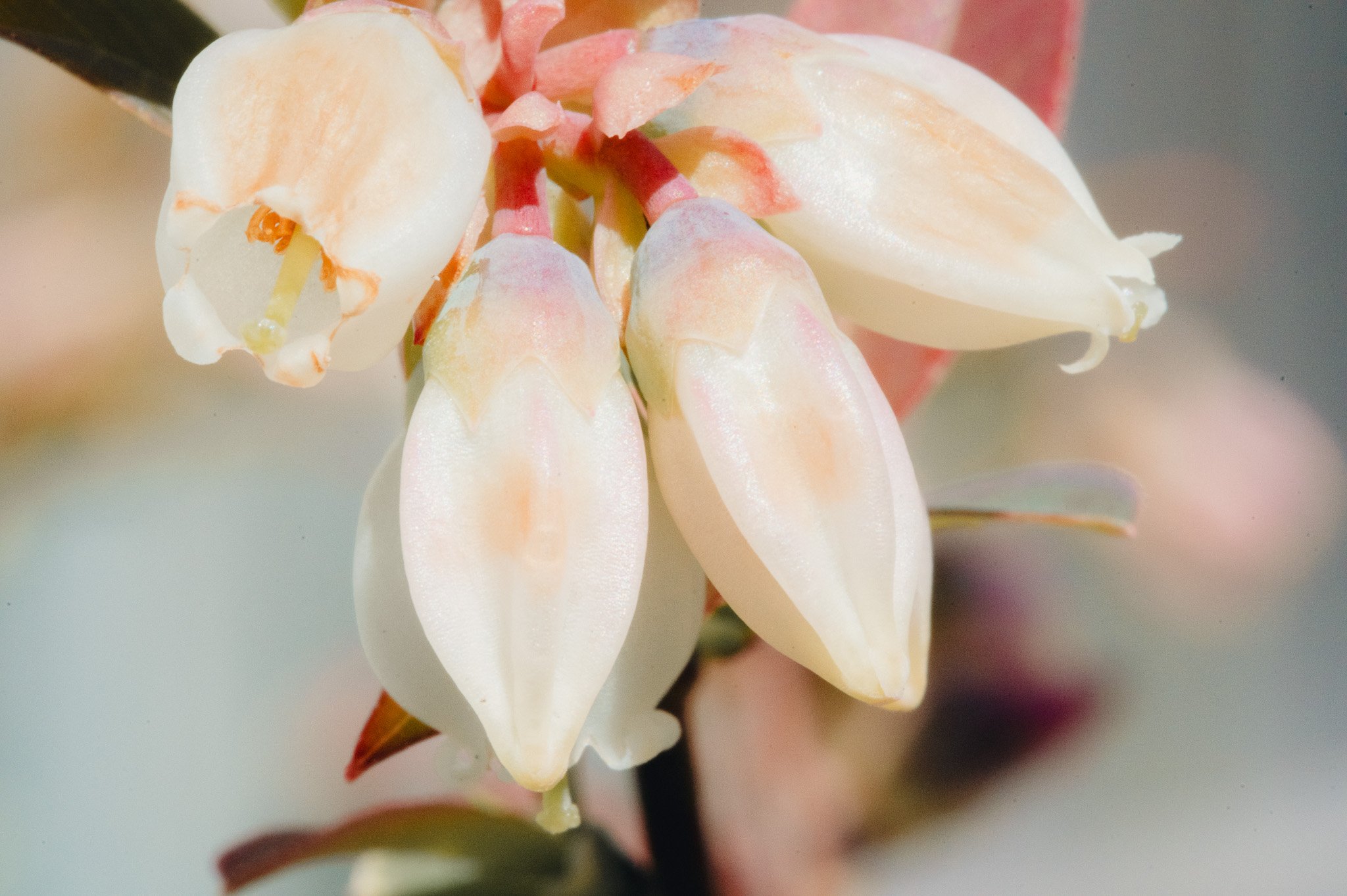
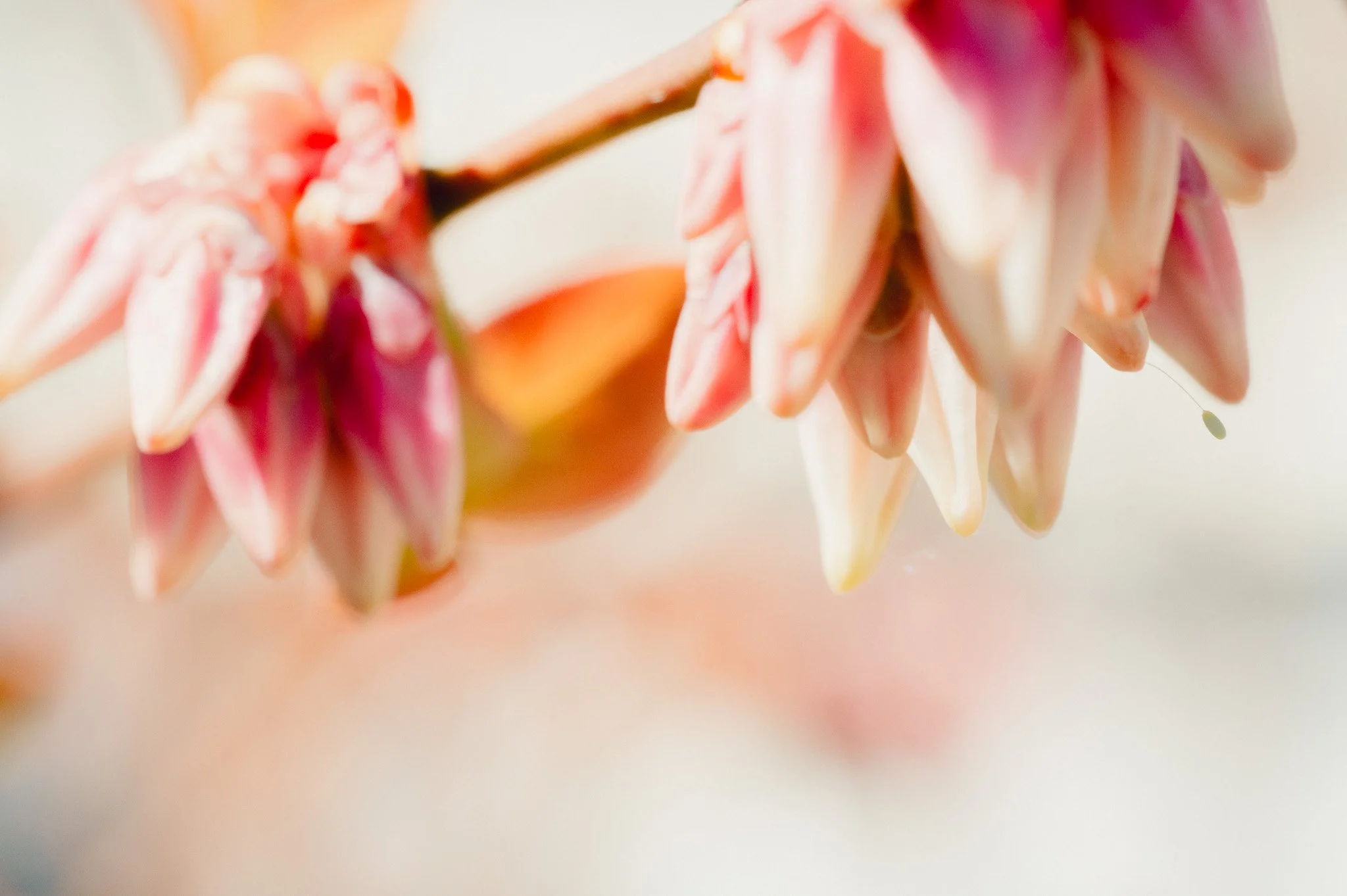
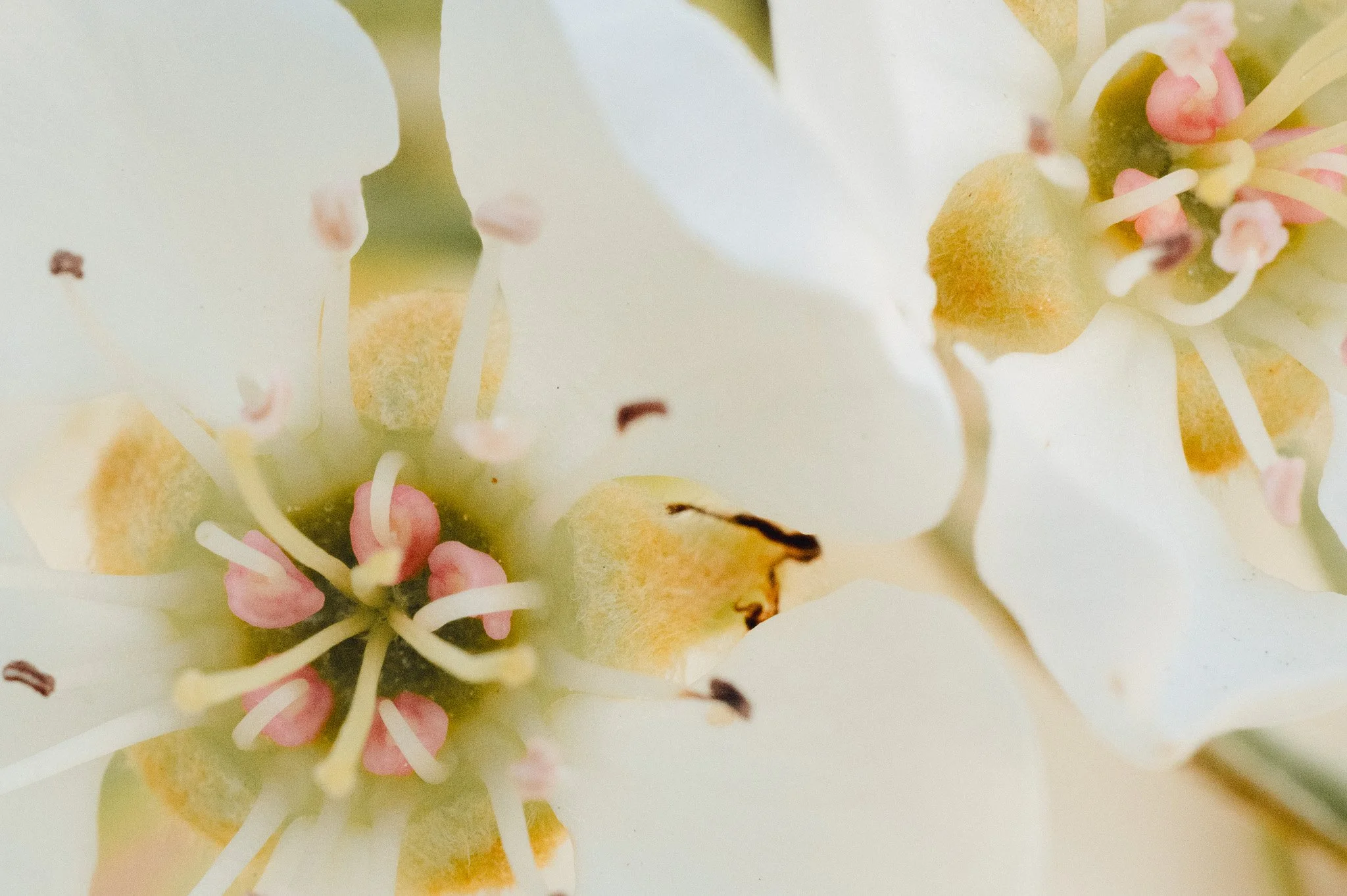
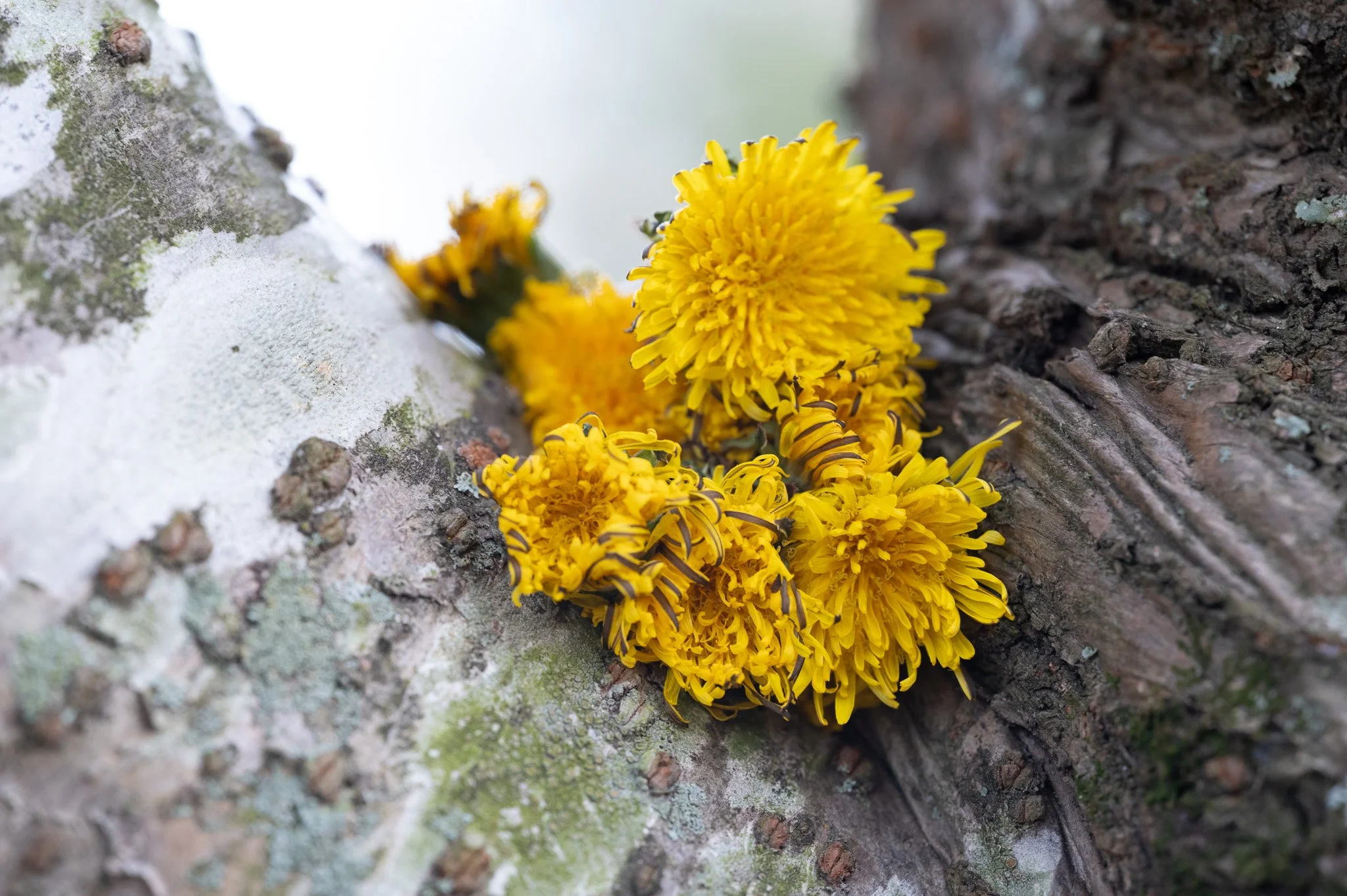
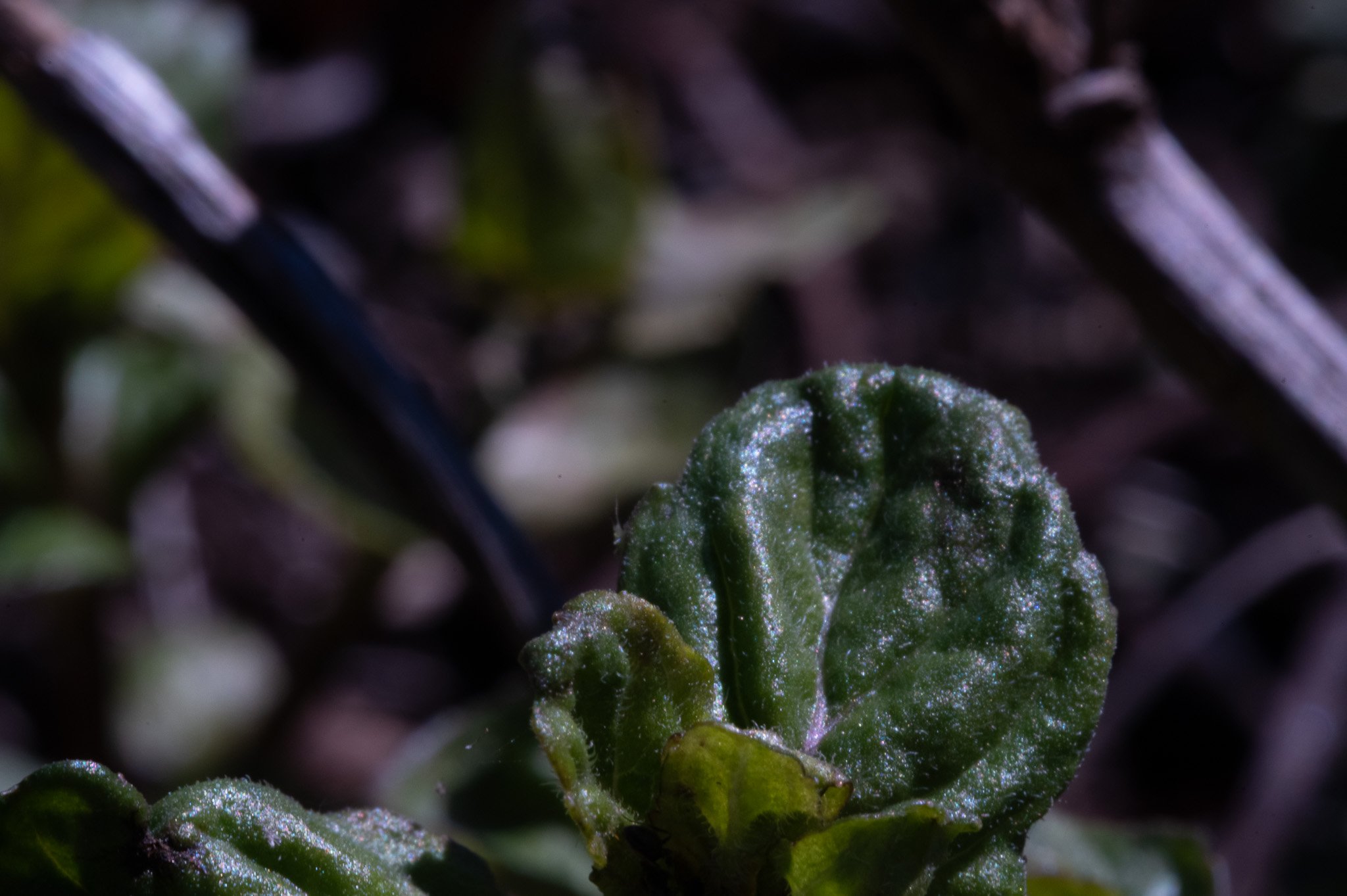
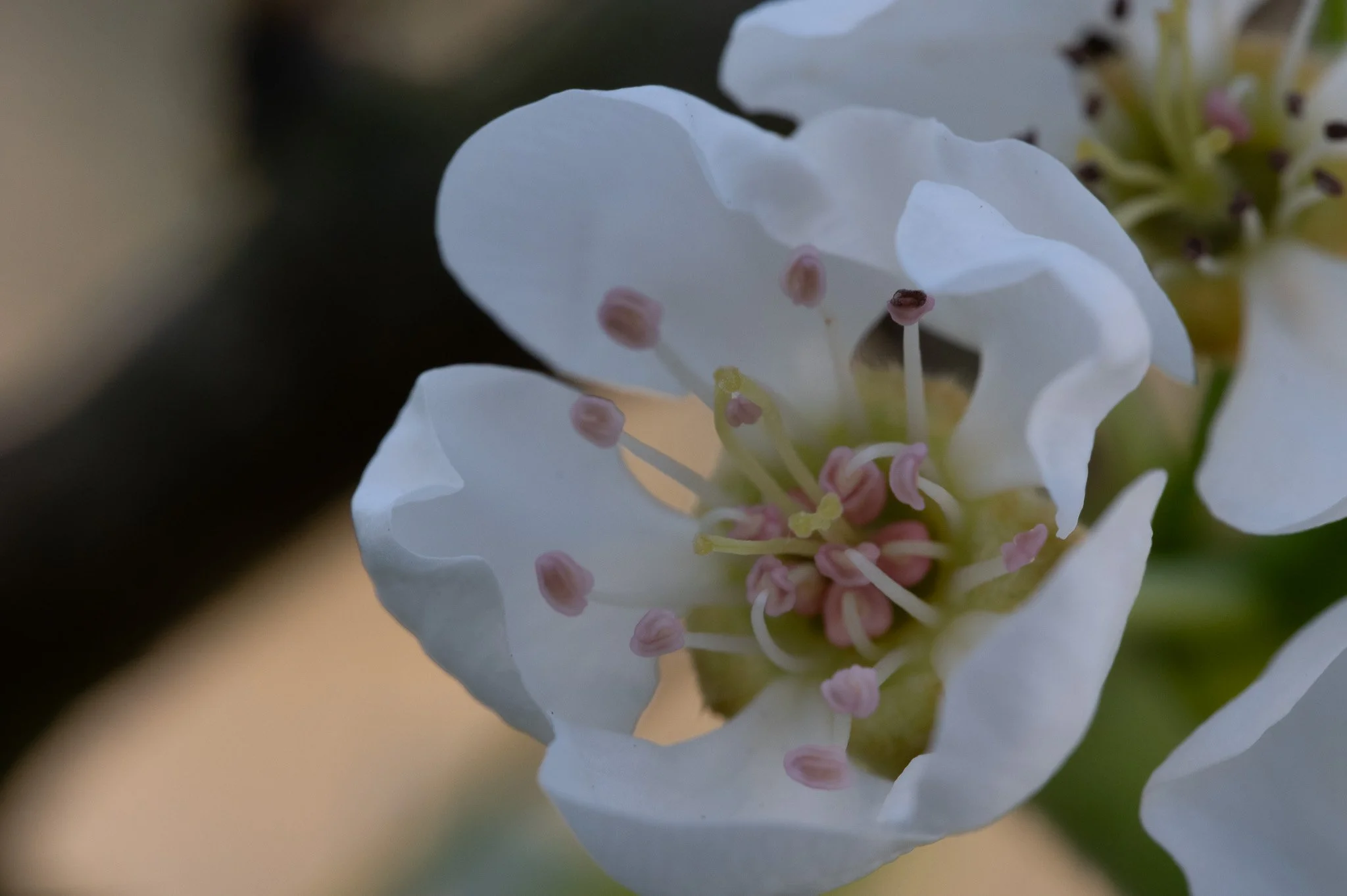
Honestly, I am not sure how I feel about this lens's image quality. I say this because of its inconsistent performance. When the stars aligned, it produced a really good image, but it was very inconsistent, and that is a big drawback for me. At times, the colors and sharpness were great, while other times the image looked a bit hazy, muddy, and had color artifacts. As I mentioned earlier, I mainly dabble in macro photography, so maybe my setup wasn't optimal for this lens, but for a similar price used, I think I would recommend others look towards the Sigma 105mm Macro ART lens.
Below are a few samples of when the image just didn’t come out right.
Conclusion: A Compelling Lens That Left Me Wanting More
In short, I think this lens left me wanting more. For the price, size, and magnification, it’s a compelling lens, but the inconsistent results have me passing on it. In the future, I would like to try their 65mm or 100mm and see how they perform.
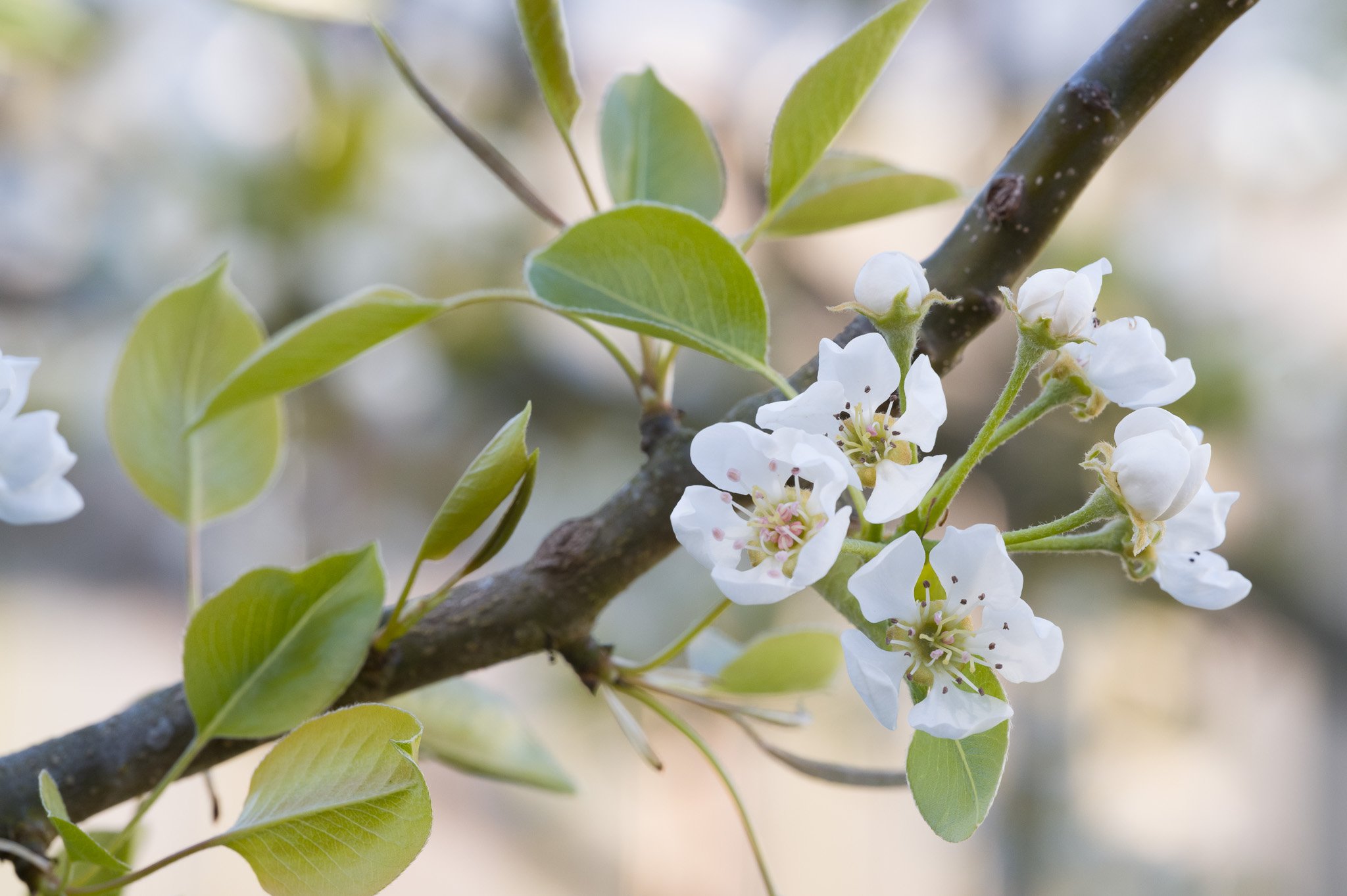
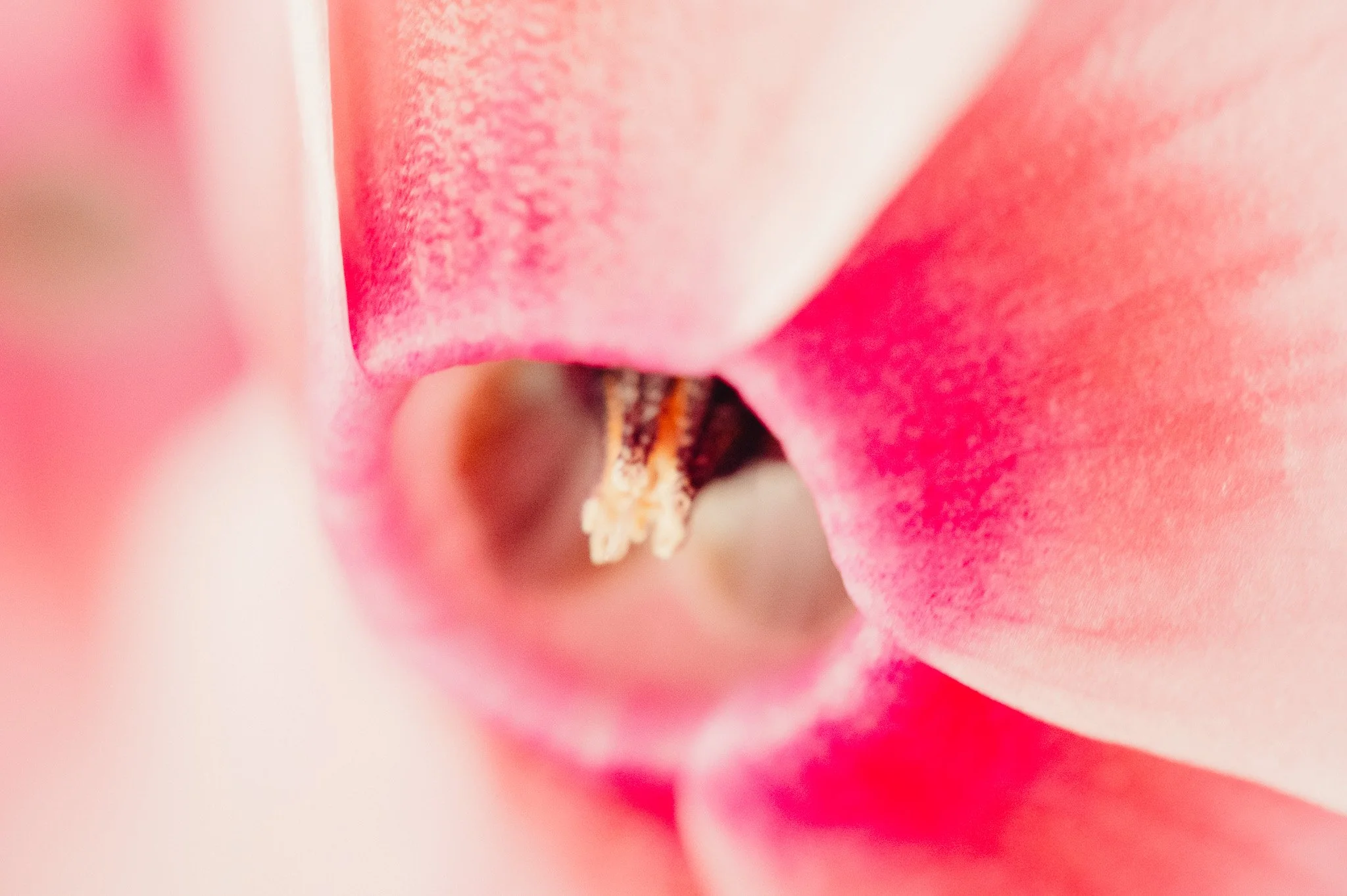
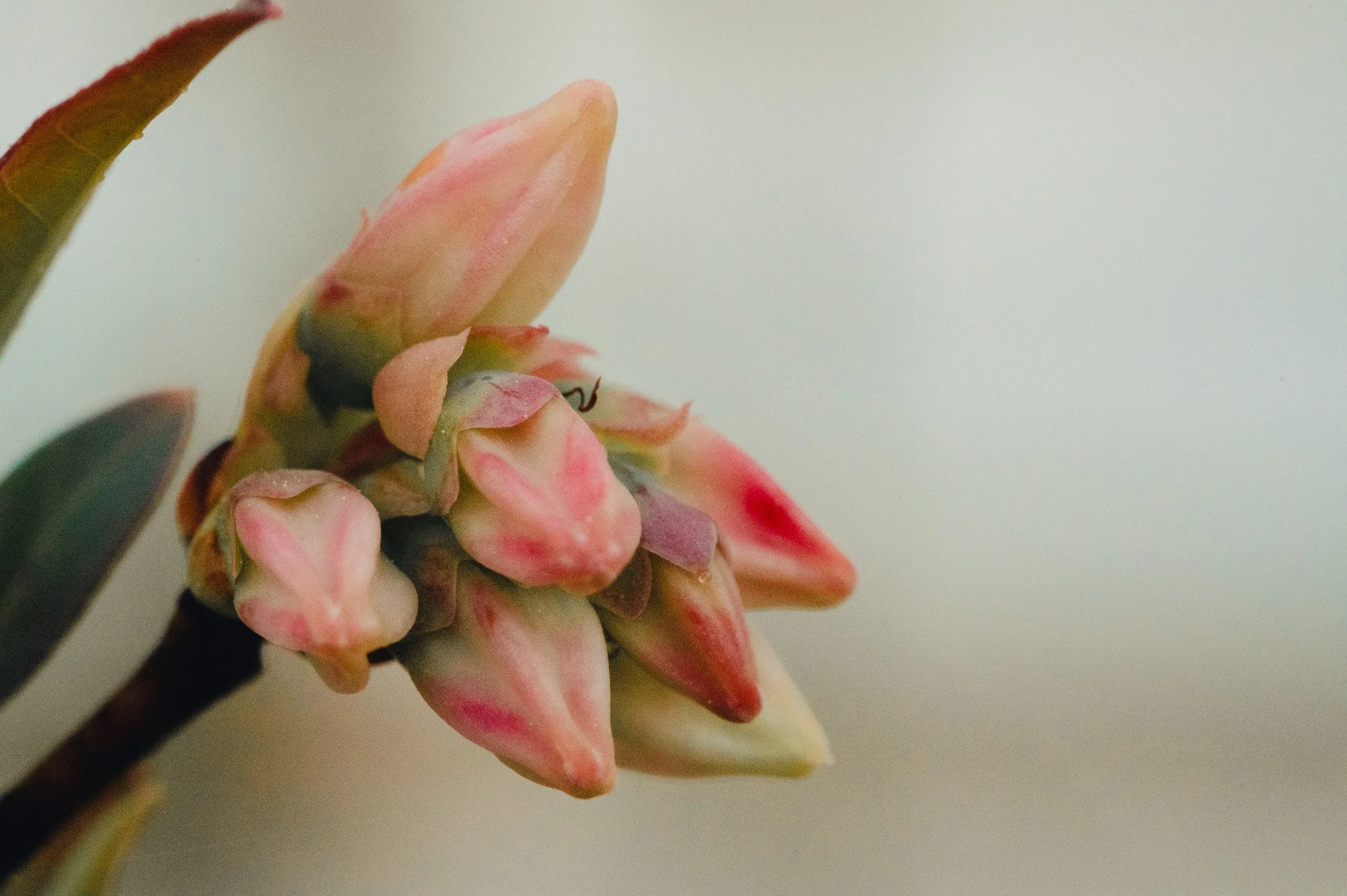
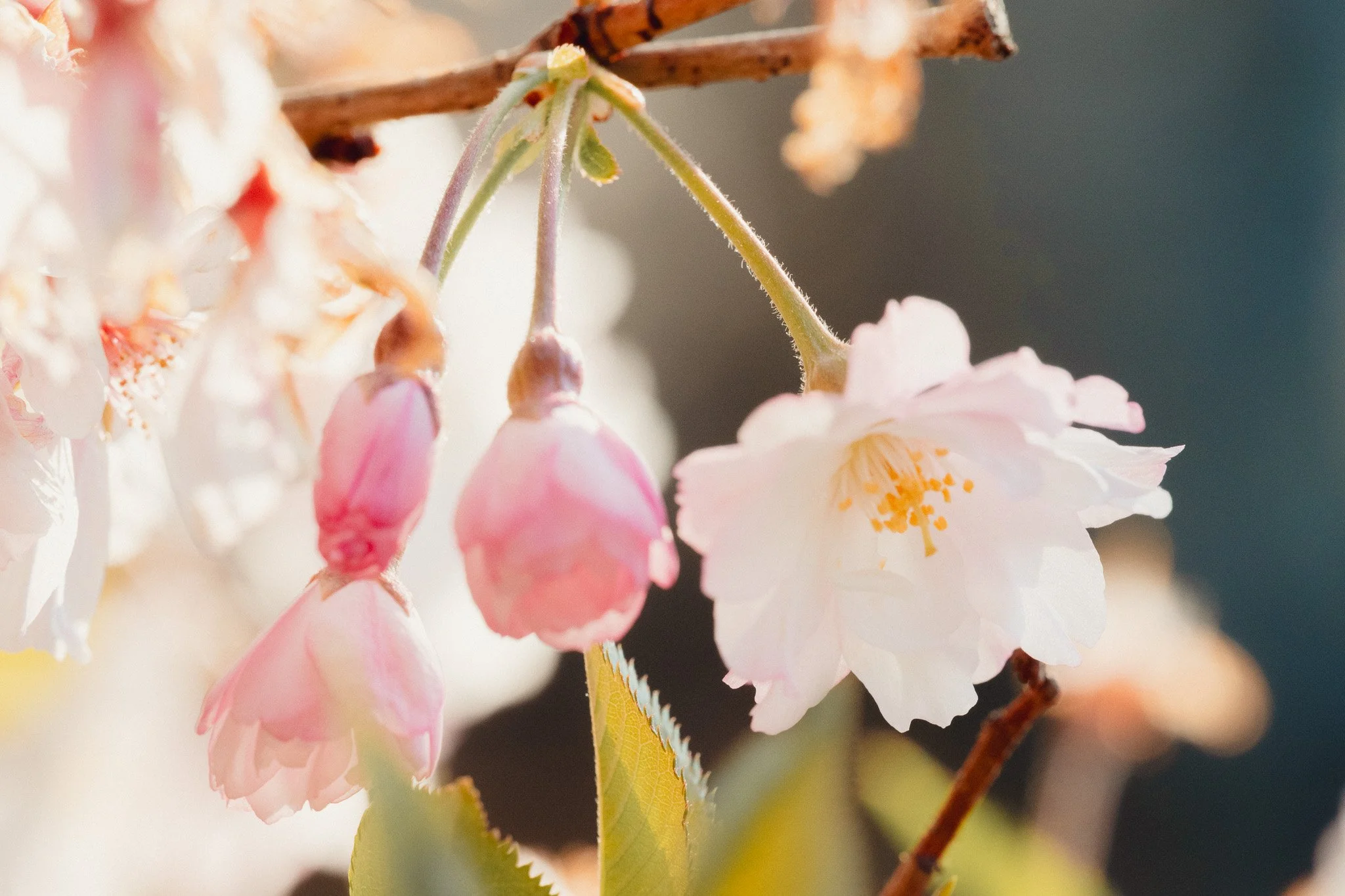
Before I finish this post, I want to share one more thing about my experience with this lens. Although technically, the images didn’t immediately meet my expectations, they did surprise me in one way. I was about to delete most, if not all, of the photos I took with this lens, but right before doing so, I did something I hadn’t done in a long time: I played around with the images and experimented with them. I added multiple presets, pushed the colors, and explored what I could do. I think this helped lower my expectations for this lens, and I ended up with some more experimental edits that I really enjoy. I guess that’s a way of saying not to lose sight of the images you want to make. Technical perfection is not always a requirement.
Stay tuned to my blog, where, in a future post, I will look at the Leica 100mm APO MACRO lens.
Thanks for reading!
I would like to avoid adding advertisements to my site. I dislike the experience of visiting a website and being bombarded with ads. To help support this, I ask that you consider using my affiliate links below when purchasing equipment.
As always, I recommend buying used from either MPB or KEH, both of which offer great return policies. If you do, please consider using my affiliate link to help me keep this site going!
Affiliate Links
I am not affiliated with Lensrental.com, but this is where I rent my equipment. If you're in the United States and considering renting cameras, lenses, or other equipment, please use the code below and give them a try. It will provide me with a small discount on future rentals, which will lead to more reviews!
https://share.lensrentals.com/x/8BG6mh
Sample Gallery